Connecting as an Early Years Professional Part 1
Reflection Point 1: Professionalism
- Describe what you think an early childhood professional is.
- Do you think there are any aspects of being an early childhood professional that is different to the usual idea of professionalism?
You can use these pictures to prompt your thinking
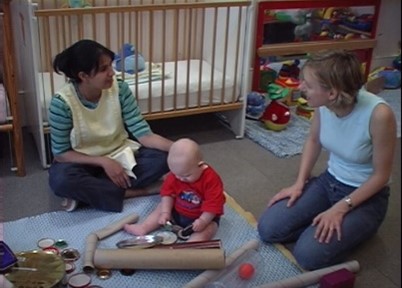
Image 1
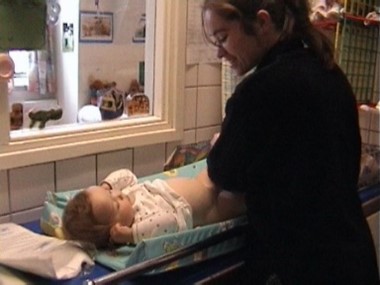
Image 2
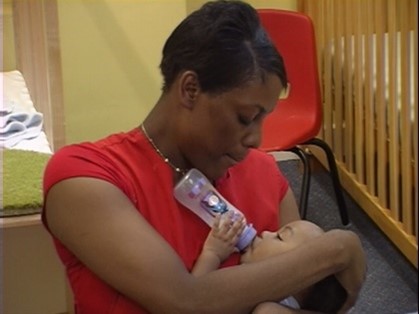
Image 3
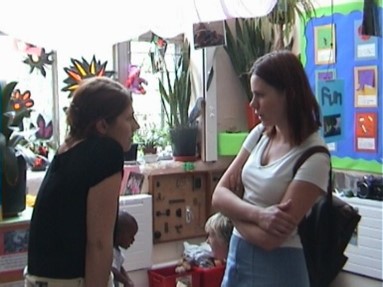
Image 4

Image 5
Reflection Point 2: Your work journey
Take some time to reflect on your feelings and motivations in your work and how you came to be where you are:
You can write notes in response to this, or draw it as a journey or map if you like, noting significant turnings and maybe barriers or help you received along the way. Think about;
- What led you into the early years field?
- Why did you want to work with young children?
- Why are you working with 0–3-year-olds (if you are)?
- Who has most influenced your work?
- What do you enjoy most about your work?
- What do you find the most challenging?
If possible, join up with a trusted colleagues to share and discuss your responses.
Connecting as an Early Years Professional Part 2
Reflection Point 3: The well-being of educators
It is important to care of your own well-being, as this impacts on your ability to respond well to children.
This includes in your personal life. So, take some time to think about how you look after your own well-being at home. Research suggests that we need regular access to the 5 ‘F’s of well-being: Family, friends, food, fitness and fun!
How do you make sure you get these on a regular basis?
Educators’ well-being also requires good levels of support in the workplace, so take time here to reflect on how your well-being is supported in your workplace.
How is your well-being supported in your workplace?
- Who supports you?
- Reflect on what makes you feel good at work.
- Who can you talk to when you need to think something through?
- How often do you have supervision?
Click to download files.
Key Aspect of Practice: Leading and Managing Part 1
Reflection Point 1: What is leadership and what is management?
The terms ‘management’ and ‘leadership’ can be thought to mean different things; they can be practised differently and yet have many overlapping features.
- What activities and behaviours do you think of when you hear the word ‘management’?
- What activities and behaviours do you think of when you hear the word ‘leadership’?
Reflection Point 2: What is your experience of being a leader?
Different people lead in different ways in different aspects in their lives.
- How do you lead in aspects of your private / social life?
- Identify something that you ‘got done with the help of other people’ recently, either at work or at home.
- What skills / actions did you use to do this?
- Which aspects of your daily work do you take a lead role in?
Click to download files.
Early Years Educators Connecting with Ideas Part 1
Reflection Point 1: Views of children
Consider the different views of children as suggested by Mills (2000) and discussed in chapter 2. Reflect on which of them you agree / disagree with and why and make some notes on any examples you have that reflect this view. Then identify how this view impacts your pedagogy. You might also want to note whether this example or impact has changed over your lifetime or socio-cultural experience.
| View of children | Agree / disagree and why |
Examples |
Impact on pedagogy |
Child as innocent |
|||
Child as vulnerable |
|||
Child as animal |
|||
Child as apprentice |
|||
Child as person in own right |
Views of Childhood: Check your understanding quiz
- What does ‘socially constructed’ mean to you?
- What is Phillipe Aries’ view of childhood?
- What are the different aspects of childhood?
Early Years Educators Connecting with Ideas Part 2
Reflection Point 2: Challenging ideas
There are many commonly held beliefs about babies’ and young children’s development and learning that are related to theoretical ideas but not always accurately so. As you read through the Handbook, look into each of the ideas below, identify what theories they relate to and see if you can find evidence that gives an alternative view.
- Young children are ‘egocentric’
- Young children cannot concentrate, they move around the whole time.
- Babies and young children play alone and then play alongside; only older children play together
- Children who don’t cry or make a fuss are ‘settled’ and secure
The learning point here is to always think more deeply and find evidence and different perspective for an idea about children, their play development and their learning.
Check your understanding quiz 2: Child Development
- What is child development?
- What does child development include?
- What does Schaffer mean by developmental trajectories?
- What is a ‘sensitive period’?
- Which perspective includes maturational theory?
- Which perspective includes systems theory?
Click to download files.
Key Aspect of Practice: Further Thinking about Observation
Questions to frame your observations and assessments
Rather than using a checklist or learning goals, try using these more open questions as a way of framing your assessments. Remember to be as descriptive as possible to give a holistic picture.
Questions to consider when observing and assessing children aged from birth to three
Connecting in close relationships with key adults: How does (child’s name) …
- respond to familiar and unfamiliar adults?
- separate from their parent/s or carers?
- express their feelings about separating from key adults?
- What is their particular ritual?
- What happens when they reunite?
- How have they settled into the group?
Connecting with feelings: How does (child’s name) …
- express their feelings and needs?
- demonstrate that they feel secure?
- respond to changes in the group?
- show affection to key adults and peers?
- express a range of feelings, such as happiness, interest, anger, frustration, excitement?
Connecting with self: How does (child’s name) …
- demonstrate self-confidence in the group?
- show that they are ready to take on new challenges?
- make choices and decisions?
- assert their wants and needs?
- show interest in their body and appearance?
- show interest in other people’s appearance?
- negotiate conflict and co-operate?
- respond to directions from adults?
- generally approach situations and experiences in the group?
- Participate in feeding, changing/toileting and dressing themselves?
- What is their sleeping and eating routine?
Connecting with others: How does (child’s name) …
- interact with other children of a similar age?
- interact with older or younger children?
- respond to other children’s expressions of happiness or distress?
- approach other children and attempt to play with them?
- Who are they friends with? what do they enjoy doing together?
Communicating with others: How does (child’s name) …
- experiment with vocal sounds or words?
- use eye contact and gesture to express their wants and needs?
- respond in conversations with adults? And with peers?
- use signed or spoken language to express their feelings, thoughts and ideas?
- respond to simple instructions?
- What words or phrases have particular significance for them?
- What are their favourite songs and rhymes? When do they use them?
- What language/s do they use and/or understand?
Making connections through being active; moving and doing: How does (child’s name) …
- move around?
- coordinate their movements?
- manipulate large and small objects and tools such as blocks, balls, paintbrushes, spoon etc?
- use large play equipment such as climbing apparatus, slides steps etc?
Making connections through being curious, thinking, and understanding: How does (child’s name) …
- prefer to spend their time?
- respond to new experiences?
- enjoy playing alone, alongside and with other children?
- explore and use a range of objects and substances?
- explore a range of substances such as sand water and dough?
- show interest in objects, people and other living things and involvement activities and events?
- use the indoor and outdoor space?
- What kinds of questions do they ask?
- What is their particular interest fascination or schema at the current time?
Making connections through creative thinking and imagining: How does (child’s name) …
- use objects to stand for something else?
- use their movements to express their thoughts, feelings and ideas?
- use books, photographs and pictures?
- use mark making to express their thoughts, feelings and ideas?
- use building materials such as blocks and clay to express their thoughts, feelings and ideas?
- move in response to music and song? And use objects and instruments to make sounds?
- recreate familiar events and experiences in their life?
- imitate the actions of others
- use their imagination to create new situations or objects?
- respond to books and pictures and to photographs of themselves, their families, their peers and other people in the wider community?
- What particular schema clusters are evident in their actions, movements paintings etc?
Click to download files.
Key Aspect of Practice: Further Thinking about Safeguarding
Check your understanding Quiz 1: Safeguarding
| When is a child seen to be ‘in need’? | |
When is a child seen to be in ‘need of protection’? |
|
Physical abuse includes: |
|
Sexual abuse includes: |
|
Emotional abuse includes: |
|
Neglect includes: |
Reflection Point 1: Well-being
Reflect on all the experiences that the babies and young children have in your setting throughout the day from the moment they enter until the moment they leave. This will include transitions, play experiences, snack and meal times, nappy changing and/or toileting experiences and many others. In what ways do these experiences support their well-being?
Are there any times when children are often in a state of ill-being? What can you do to improve this?
Further information
- The NSPCC website provides useful information about keeping these and other groups of children safe from abuse and neglect. Access this now through the link below and explore the information available here:
http://www.nspcc.org.uk/Inform/research/research_wda48228.html - Now watch the NSPCC short video ‘All babies count’, which you can access here:
http://www.nspcc.org.uk/news-and-views/our-campaigns/current-campaigns/all-babies-count/all-babies-count-campaign_wda88524.html - Click on the links to view external sites.
Click to download files.
Chapter 2 Early years educators connecting with ideas
DOCX Practice task 2: Developing your pedagogical vision
DOCX Figure 1: Example of planning based on interests and areas
DOC Figure 2: Emergent planning
DOC Template Emergent planning using ‘Avenues of Exploration’ downloadable empty template of figure 1
DOCX Template Short-term plan based on interests and areas downloadable empty template of figure 2
DOCX Chapter 2: Workbook
DOCX
Click to download files.
Chapter 2.1: Key Aspect of Practice: Observation
Click to download files.