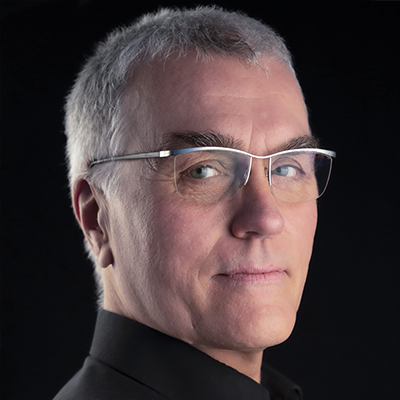
Thomas Metzinger
Professor of Theoretical Philosophy
Johannes Gutenberg University of Mainz, Germany (until 2019)
Profile – Thomas Metzinger (b. 1958)
Thomas Metzinger is no one. A German philosopher, he was Full Professor of Theoretical Philosophy at the Johannes Gutenberg-Universität Mainz until retiring in 2019 and claims that no one ever had or was a self. In Being No One, and his later book The Ego Tunnel, he argues that what we take to be persistent entities are really ongoing processes: the contents of transparent self-models. He has experienced and written about many ‘altered states’, including lucid dreams, out-of-body experiences, meditation, and drug-induced experiences. His 2023 book The Elephant and the Blind focuses on pure consciousness and what it means for our understanding of consciousness in general. He is concerned about the ethical implications of our rapidly advancing phenotechnology. When we can choose which areas of pheno-space we want to visit, can enhance our cognitive skills with specially tailored chemicals, and can create machines that have the capacity for consciousness, we will need to take responsibility for the consequences. Hence, much of his work is in the new field of neuroethics, including a book on Bewusstseinskultur (a culture of consciousness) that asks what good states of consciousness are and how we can create a culture that cultivates them.
More biographical information
Interview with Richard Marshall, ‘All about the ego tunnel’, for 3:AM Magazine
Interview with Michael Taft for Being Human, September 2012
Twitter @ThomasMetzinger
Publications
List of publications on Wikipedia
List of free downloads of papers in English and German
Citations on Google Scholar
Quotes on Goodreads
Selected publications relevant to consciousness
Frith, C. D., and Metzinger, T. (2016). What’s the use of consciousness? How the stab of conscience made us really conscious. In A. K. Engel, K. J. Friston, and D. Kragic (Eds), The pragmatic turn: Toward action-oriented views in cognitive science (pp. 193–214). Cambridge, MA: MIT Press. Google Books preview here.
Lenggenhager, B., Tadi, T., Metzinger, T., and Blanke, O. (2007). Video ergo sum: Manipulating bodily self-consciousness. Science, 317(5841), 1096–1099. Paywall-protected journal record here. Direct PDF download of peer commentaries (preprint) here.
Metzinger, T. (1995a). Faster than thought: Wholeness, homogeneity and temporal coding. In T. Metzinger (Ed.), Conscious experience (pp. 425–461). Thorverton, Devon: Imprint Academic. Google Books preview here.
Metzinger, T. (Ed.) (1995b). Conscious experience. Thorverton, Devon: Imprint Academic. Google Books preview here.
Metzinger, T. (Ed.) (2000). Neural correlates of consciousness: Empirical and conceptual questions. Cambridge, MA: MIT Press. Google Books preview here.
Metzinger, T. (Ed.) (2003). Being no one: The self-model theory of subjectivity. Cambridge, MA: MIT Press. Google Books preview here.
Metzinger, T. (2005). Out-of-body experiences as the origin of the concept of a ‘soul’. Mind and Matter, 31, 57–84. Paywall-protected journal record here. Direct PDF download (final version) here.
Metzinger, T. (2009). The ego tunnel: The science of the mind and the myth of the self. New York: Basic Books. Google Books preview here.
Video
Minimal phenomenal selfhood and minimal phenomenal experience; Three types of arguments for a global moratorium on synthetic phenomenology. Three Pufendorf Lectures, October 2021
List of video and audio material in English and German
The transparent avatar in your brain. TEDx talk, Barcelona, July 2013
Interview with Sue Blackmore, June 2015
Body-representation and self-consciousness: from embodiment to minimal phenomenal selfhood. Lecture (with abstract) on the phenomenal self-model, Max Planck Institute, Leibniz, February 2013
Being no one: Consciousness, the phenomenal self, and first-person perspective. Lecture introduced by Alva Noë, UC Berkeley, February 2005
Audio
The nature of consciousness. Conversation on consciousness and self, Sam Harris’s Waking Up podcast
You are not a self: Bodies, brains, and the nature of consciousness. Interview (also touching on free will) for ABC podcast All in the Mind, October 2009 (includes transcript)